
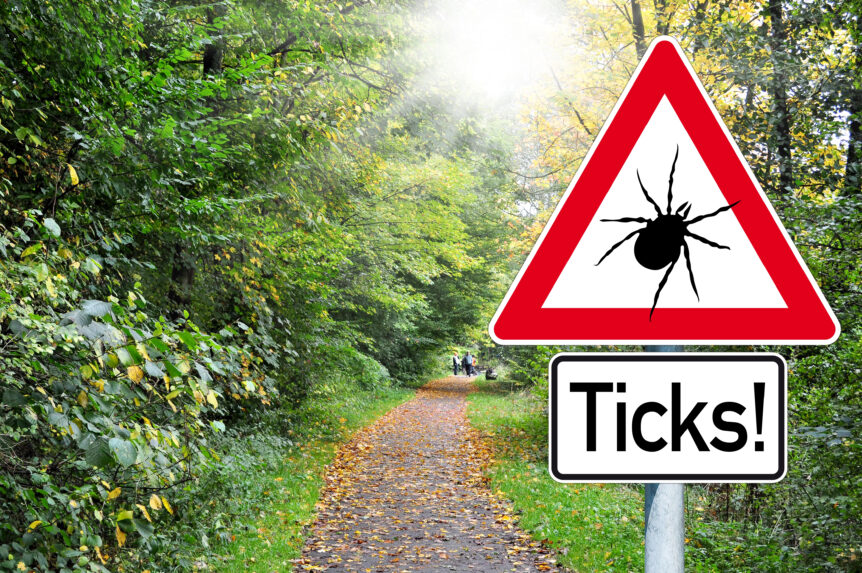
Writing about Tick-borne Illnesses and Alpha-Gal Syndrome
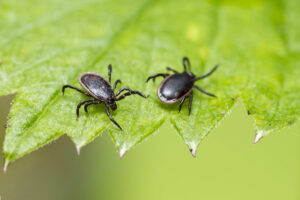
My first encounter with a tick-bite illness . . .
Occurred when I was a Pediatric Intern at a large major city hospital. A child arrived to the ER, quite ill with a rash and fever, and the concern at first was the child had Rocky Mountain Spotted Fever (RMSF). While treatable with antibiotics and critical care, RMSF still has a significant mortality rate. (untreated 30%, treated is around 3-5%)
Happily, this child did not have the disease, but any kid or adult with the classic rash, fever, headache and potential exposure to a tick bite or history of tick bite needs to be considered for a work-up for RMSF.
Carried by the dog tick, RMSF is caused by a bacteria called rickettsia ricketsii.
The rash is impressive – and the hallmark sign is the rash extends to the palms and soles of the feet. Measles and other similar rashes don’t.
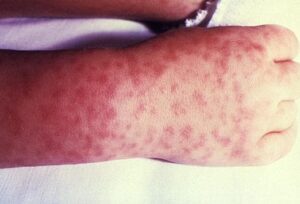
Classic reddish purple spotted rash of Rocky Mountain Spotted Fever Courtesy of the CDC
My second encounter with tick-borne illness . . .
I was working as a staff doctor in the late 1980s at an occupational medicine clinic – where work-related injuries were cared for along with pre-employment physicals. A middle-aged man came in stating he had found a tick on his leg earlier in the week. He was a salesman and had just returned from a sales trip to the East Coast. A rash developed and while he wasn’t very ill, he didn’t feel right. The rash on his leg (called erythema migrans, i.e. a red rash that moves) looked like this:
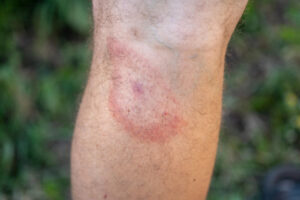
This lesion is the classic “bullseye” of Lyme disease, spread by the deer tick and caused by a spirochete bacteria. The patient was started on antibiotics and referred to the infectious disease specialist.
The tick-borne illness I hope to never encounter is . . .
ALPHA-GAL syndrome!
Of all the tick-related illnesses, this newest one has to be the strangest. It has nothing to do with alpha-males or alpha-gals, or transmittable bacteria. The culprit is the Lone Star tick. Alpha-GAL stands for the hairy long chemical name of a carbohydrate (sugar) called galactose-α-1,3-galactose.
This disease is an ALLERGY and not communicable. All NON-PRIMATE mammals (that’s all mammals besides humans and chimps) have alpha-gal in their bodies. Lone star ticks have alpha-gal in their saliva. When they bite a person or primate, small amounts of that saliva gets transferred. The more tick bites you have, the more exposure your immune system gets to alpha-gal, but one bite is still enough.
Your immune system – as it’s supposed to do — goes into fight mode and makes antibodies to this foreign carbohydrate. Those antibodies then trigger an allergic reaction when the human is exposed to alpha-gal again.
Unfortunately, this means all RED MEAT – beef, pork, lamb and venison. Even some dairy products and medicines (cetuximab; thyroid pills made from cows or pigs; anti-snake venom made from horses or sheep; and gelatin-based colloid blood substitute used for shock/hypovolemia) can have alpha-gal carbohydrate in them.
This allergic reaction can be mild (hives) to serious (anaphylaxis). The good news is abstinence can make the heart grow fonder here – some people after a period have been able to resume eating red meats because their sensitization is less with time. Other standard allergy treatments are used including antihistamines, epinephrine and oral steroids.
Instead of using another type of cliche allergy to maim or kill a character, how about using Alpha-gal? Novel Malpractice by Ronda Wells MD Share on X
SYMPTOMS of ALPHA-GAL:
Three to six hours after eating red meat or dairy products your character may see a constellation of the following symptoms:
- Dizziness or feeling faint
- Lip, tongue or eyelid swelling
- Severe stomach pain, nausea and/or vomiting with or without diarrhea
- Hives or itching rash
- Drop in blood pressure
- Heartburn or indigestion
- Cough and or shortness of breath with or without difficulty breathing
- Constipation
Click this to see a map of the lone_star_tick range
Alpha-gal is treated like other allergies with antihistamines, avoidance of the allergen, epinephrine, and/or oral steroids.

Other tick-borne diseases to consider writing about:
-
Anaplasmosis
-
Erlichiosis
-
Babesiosis – very serious in the elderly and immunocompromised individuals
-
Tularemia – human exposure usually from infected rabbits, also called rabbit fever
-
Powassan Fever – very rare, but causes very serious encephalitis/meningitis
-
Heartland Virus – similar to anaplasmosis and babesiosis.
- Tick-borne Relapsing Fever – like cyclical flu, or chronic COVID
One tick-related disease that is not due to an infectious agent:
- Tick paralysis – due to a neurotoxin in tick saliva, caused by multiple tick species, similar to Guillan-Barre syndrome, see an ascending paralysis, kids more susceptible due to their smaller size
QUESTIONS to ask yourself:
- What is the character’s age? Again, as nearly always, babies/young children and those over age 65 will recover more slowly and don’t respond to therapy as well. Children have a higher incidence of tick exposure because they play outdoors or in parks.
- What is their occupation? Do they do outdoor work such as trimming, lawns, trees, utility workers, lineman, park ranger, house painter, police, firemen, or a forester? Are they hunters? My salesman was an unusual example, but he had parked near a heavy forested area. Any work that regularly takes someone outdoors near vegetation puts them at risk for tick bites.
- Do they own any outdoor pets? Dogs and cats frequently can bring ticks inside the house.
- What was your character wearing? Did they run away half-naked from a villain through the woods, or were they wearing long sleeves and pants?
- Did your character use insect repellent for ticks? Are they an always-prepared Boy Scout type, or someone who thinks it will never happen to them?
- What time of year? Obviously warmer weather is conducive to tick bites and not freezing temperatures.
- How sick do you want to make them? Clearly, some illness like RMSF, tularemia, Powassan Fever and Heartland Virus can pose a serious risk to life or even death. The others more in the chronic realm such as Alpha-gal, Lyme disease and tick-related relapsing fever. Alpha-gal however, can cause a fatal allergic reaction.

Remember: the best way for your character to avoid tick illness is to AVOID TICK BITES!
retro deep sea diver in metal helmet. isolate on white background. Pop art vector illustration drawing
DEEPER DIVES:
https://www.cdc.gov/ticks/media/pdfs/2025/03/tickborne-diseases-manual-508.pdf
https://www.ncbi.nlm.nih.gov/books/NBK430881/
https://www.cdc.gov/rocky-mountain-spotted-fever/about/index.html
https://www.yalemedicine.org/conditions/alpha-gal-syndrome-ags
https://www.prevention.com/health/a20117220/tick-borne-diseases/